Introduction
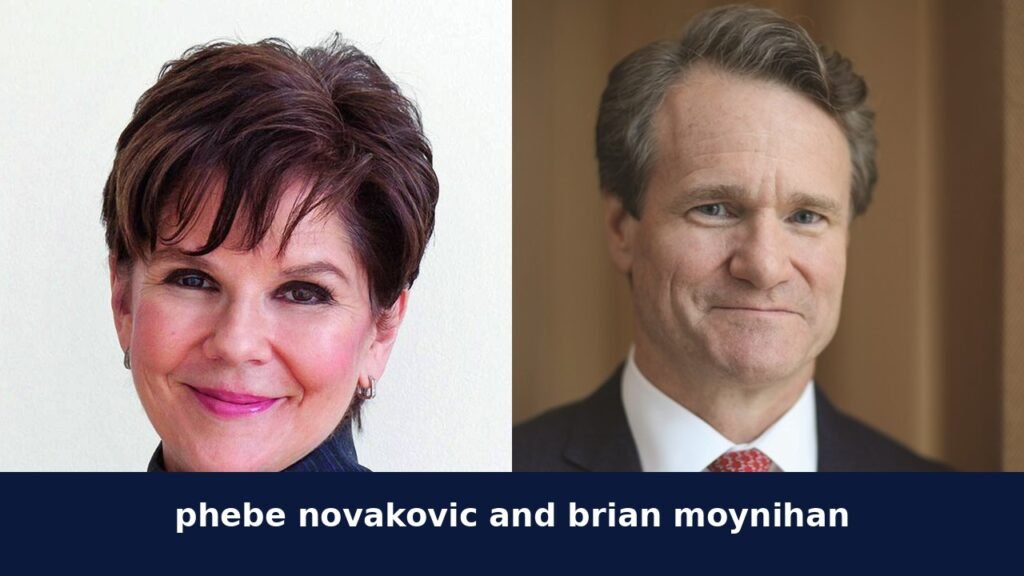
phebe novakovic and brian moynihan is a name pairing that joins two chief executives who run two very different kinds of American power, one in defense ships, submarines and business jets and the other in bank branches, credit cards and global markets, One is a former intelligence officer who became the chair and chief executive of General Dynamics, one of the largest aerospace and defense companies in the world, while the other is a lawyer turned banker who became the chair and chief executive of Bank of America, one of the largest banks in the world. Yet a careful look at the public record shows no verified deal, shared company, shared board seat, endorsement or documented working partnership joining them, and this guide says so plainly rather than inventing a shared history.
This guide gives both people a full and fair account, using only facts that can be checked in public sources, and it answers the connection question honestly at the end. Readers who want a phebe novakovic biography will find the story of a Frankfurt-born intelligence officer’s daughter who served in the Central Intelligence Agency and the Department of Defense before climbing General Dynamics from the inside, and readers who want a brian moynihan biography will find the story of an Ohio-born son of a large Irish-American family who studied history and law before steadying a crisis-shaken bank. Readers who follow business leader profiles will recognise both stories as classic examples of how lasting authority is built, one decision and one difficult year at a time, over decades rather than in a single dramatic moment.
Contents
phebe novakovic and brian moynihan: The Defense Chief From Frankfurt to General Dynamics
Phebe Nevenka Novakovic was born on November 13, 1957, in Frankfurt, West Germany, where her father, Michael Novakovic, served as an intelligence officer in the United States Air Force. Her father had immigrated to the United States from Serbia as a teenager and spent much of his military career stationed in West Germany, so Novakovic spent much of her childhood in Cold War Europe, an upbringing that shaped her sense of public service. After the family returned to the United States, she attended an Episcopal boarding school in San Antonio, Texas, and then enrolled at Smith College in Northampton, Massachusetts, where she studied government and German and graduated in 1979.
Novakovic then built a career in government before she ever entered corporate life, a path that sets her apart from most chief executives in American industry. She served as an operations officer in the Central Intelligence Agency, worked as a deputy associate director at the Office of Management and Budget, and from 1997 to 2001 served as special assistant to the secretary and deputy secretary of defense. She earned her Master of Business Administration from the Wharton School of the University of Pennsylvania in 1988, a combination that later shaped her famously disciplined approach to capital allocation.
She joined General Dynamics in 2001 and rose through a series of senior roles that covered nearly every part of the company, including vice president for strategic planning, senior vice president for planning and development, and executive vice president for marine systems. In 2012 she became president and chief operating officer, and on January 1, 2013, she became chairman and chief executive officer, taking charge of a company still bruised by a difficult 2012. The phebe novakovic general dynamics ceo story therefore begins with government service and a slow internal climb, and Novakovic made the role her own at once, pushing operating performance, strict cost discipline and an ethos centred on transparency, trust, alignment and honesty.
phebe novakovic and brian moynihan: The General Dynamics Years and the CSRA Deal
Under Novakovic, General Dynamics grew into a company with annual revenue above 42 billion dollars and more than 100,000 employees, spread across four broad businesses that readers may know by name. The Aerospace group builds Gulfstream business jets, the Marine Systems group builds submarines and ships through Electric Boat, Bath Iron Works and NASSCO, the Combat Systems group builds armoured vehicles and weapons systems, and the Technologies group supplies information technology and mission services to government customers. That mix gave Novakovic a footprint in national defense that few corporate leaders could match.
The landmark deal of her tenure came in 2018, when General Dynamics completed its 9.8 billion dollar acquisition of CSRA, an information technology services firm, a move that greatly enlarged the company’s Technologies business and its work for government agencies. The deal showed her method: large, carefully priced, and aimed at a business she understood from her own government years. Her tenure has also been marked by improved profitability and growth across the defense and aerospace businesses, and by a reputation for plain speaking with investors, since she has often stressed operating results and cash generation over promises about future growth.
Past General Dynamics, Novakovic holds roles that show how defense, finance and civic life overlap at the top of American business. She has served on the board of directors of Abbott Laboratories since 2010 and was elected to the board of directors of JPMorgan Chase in 2020, and she serves on the boards of the Congressional Medal of Honor Foundation and the National Military Family Association, as well as on the boards of trustees of Northwestern University and the Center for Strategic and International Studies. She also chairs the Association of the United States Army and Ford’s Theatre, and she appears regularly on Forbes lists of powerful women in business. She has three daughters and is married to David Morrison, having previously been married to Michael Vickers, a former defense official.
phebe novakovic and brian moynihan: The Ohio Lawyer Who Steadied Bank of America
Brian Thomas Moynihan was born on October 9, 1959, in Marietta, Ohio, the sixth of eight children in an Irish-American Catholic family, and his large-household upbringing is often cited as the source of his competitive drive. He studied history at Brown University, graduating in 1981, where he co-captained the rugby team and met his future wife, Susan Berry, and then earned his law degree from the University of Notre Dame Law School in 1984. He returned to Providence, Rhode Island, to practise corporate law at Edwards and Angell, the city’s largest corporate law firm at the time, a start that gave him a lawyer’s eye for risk that would later matter enormously in banking.
Moynihan joined FleetBoston Financial in 1993 as a deputy general counsel and rose through its legal and wealth management ranks, serving as executive vice president in charge of brokerage and wealth management from 1999 to 2004. He came to Bank of America when it merged with FleetBoston in 2004, and he took on a series of increasingly senior roles, including leading Merrill Lynch after Bank of America took it over during the financial crisis. On January 1, 2010, he was named chief executive of Bank of America, succeeding Kenneth Lewis, and he later also became chairman, inheriting a bank battered by the 2008 financial crisis and by the heavy fallout of its Countrywide mortgage acquisition. The brian moynihan bank of america story therefore begins with law books and legal clean-up rather than with trading floors, yet Moynihan made the role his own through patience and a steady hand.
The early years of his tenure were dominated by resolving the bank’s vast mortgage liabilities, a task for which his legal training proved unusually valuable. In 2011 he helped secure a 5 billion dollar investment from Warren Buffett, a move widely seen as a vote of confidence in the bank at a moment when confidence was scarce. From that low point he rebuilt Bank of America into a consistent profit maker, guided by the brian moynihan responsible growth philosophy, a framework that ties financial performance to customer care, community impact and careful risk taking, and by heavy investment in digital banking, including the Erica virtual assistant that now serves millions of customers.
phebe novakovic and brian moynihan: The Bank of America Rebuild and the Responsible Growth Years
Under Moynihan, Bank of America grew back into one of the world’s largest financial institutions, with more than 210,000 employees serving people, companies of every size and institutional investors across the United States and around the world. The bank’s recovery rested on steady cost control, growth in deposits and digital use, and a refusal to chase risky growth for its own sake, Moynihan’s leadership earned him Euromoney’s Banker of the Year award in 2020 and Chief Executive magazine’s Chief Executive of the Year award in the same year, honours that marked how far the bank had travelled from its crisis years. Readers who follow corporate leadership profiles will know that few bank chiefs have held the top job as long as Moynihan has, since his tenure now stretches past fifteen years.
Past the bank, Moynihan holds roles that show how banking, education and civic life overlap at the top of American business. In July 2024 he became the 22nd Chancellor of Brown University, his alma mater, after serving on its Fellows since 2016 and on its Trustees from 2010 to 2016. He participates in the Business Roundtable, the Financial Services Forum, the Bank Policy Institute and the World Economic Forum’s International Business Council, chairs the Sustainable Markets Initiative founded by King Charles III, and serves on the board of the Council on Foreign Relations. He also works with civic leaders in Charlotte, Massachusetts and Rhode Island, and advises the Smithsonian’s National Museum of African American History and Culture.
phebe novakovic and brian moynihan: Two Turnarounds, Two Different Playbooks
Placed side by side, the two careers of phebe novakovic and brian moynihan show two different models of taking charge at a moment of trouble and rebuilding trust over many years. Novakovic took over General Dynamics after a bruising 2012 and restored its performance through operating discipline, strict capital allocation and one large, well-judged acquisition in CSRA, growing revenue and profit without abandoning the company’s core defense work. Moynihan took over Bank of America in the wreckage of the financial crisis and restored its standing through legal clean-up, cost control, deposit growth and digital investment, turning a bank defined by its liabilities into one defined by steady profit. Yet both leaders now sit at the top of their fields.
Their leadership styles also share a family resemblance that helps explain why readers pair them, even though their industries differ so sharply. Both are known for plain speaking, for distrust of flashy promises, for long hours and for a habit of judging results in cash and performance rather than in headlines. Novakovic’s ethos framework of transparency, trust, alignment and honesty finds its echo in Moynihan’s Responsible Growth philosophy, since both frameworks try to give thousands of employees a simple rule for daily decisions. Both rules serve the same purpose: keeping a vast organisation steady when markets and politics turn rough.
Age and timing add one more layer to the comparison, since the two leaders belong to the same generation and reached the top within a few years of each other. Novakovic, born in 1957, became chief executive in 2013 at the age of fifty five after a government career and a twelve-year internal climb, while Moynihan, born in 1959, became chief executive in 2010 at the age of fifty after a legal career and a seventeen-year banking climb. Both have now led their companies for well over a decade, which is why readers keep searching for their names side by side even without a shared event to explain the pairing.
phebe novakovic and brian moynihan: Wealth, Honours and Public Work
Wealth looks very different for the two leaders, and honest reporting requires dating every figure rather than presenting a single number as permanent. Novakovic’s wealth rests largely on General Dynamics stock and pay accumulated over a long tenure, and she appears on Forbes lists of powerful women in business and of self-made women, with her ranking moving from year to year as markets move. Moynihan’s wealth rests on Bank of America stock, pay and investments, and published estimates of his net worth vary so widely, from roughly one hundred million dollars to far higher figures in some reports, that this guide does not present any single estimate as settled fact. Readers should treat every wealth figure for either leader as a dated snapshot rather than a fixed truth.
Honours tell a similar story of two different ladders, since each leader has collected the highest marks their own field offers. Novakovic’s board seats at Abbott Laboratories and JPMorgan Chase, her chairmanships of the Association of the United States Army and Ford’s Theatre, and her regular place on Forbes power lists mark her inside America’s defense and corporate establishment. Moynihan’s Euromoney Banker of the Year award in 2020, his Chief Executive of the Year award in the same year, his chairmanship of the Sustainable Markets Initiative and his election as Chancellor of Brown University in 2024 mark him inside banking, education and civic life. Both sets of honours show sustained performance at the top over many years rather than a single lucky year.
Public work past their main jobs also separates them, though both give time to institutions outside their core work. Novakovic’s trusteeships at Northwestern University and the Center for Strategic and International Studies, her work for military families and her chairmanship of Ford’s Theatre show a long habit of putting defense leadership into classrooms, museums and service charities. Moynihan’s chancellorship at Brown, his advisory work for the Smithsonian’s National Museum of African American History and Culture and his civic councils in Charlotte, Massachusetts and Rhode Island show a similar habit of putting banking leadership into education and local life. Both have used their platforms to build things that outlast a single deal or a single quarter.
phebe novakovic and brian moynihan Facts at a Glance
| Point | Phebe Novakovic | Brian Moynihan |
|---|---|---|
| Full name | Phebe Nevenka Novakovic | Brian Thomas Moynihan |
| Born | November 13, 1957, Frankfurt, West Germany | October 9, 1959, Marietta, Ohio, United States |
| Education | Smith College, 1979; MBA, Wharton School, University of Pennsylvania, 1988 | Brown University, 1981; law degree, University of Notre Dame, 1984 |
| Early career | Central Intelligence Agency; Office of Management and Budget; Department of Defense, 1997 to 2001 | Corporate lawyer, Providence; FleetBoston Financial from 1993 |
| Defining role | Chairman and chief executive, General Dynamics, since January 1, 2013 | Chairman and chief executive, Bank of America, since January 1, 2010 |
| Signature work | Turnaround after 2012; 9.8 billion dollar CSRA acquisition, 2018 | Post-crisis rebuild; Responsible Growth; Erica digital assistant |
| Top honours | Forbes power lists; chairman, Association of the United States Army and Ford’s Theatre | Euromoney Banker of the Year, 2020; 22nd Chancellor of Brown University, 2024 |
| Family | Three daughters; married to David Morrison | Three children; married to Susan Berry |
| Fortune snapshot | Forbes list rankings move yearly; no single settled figure used here | Published estimates vary widely; no single settled figure used here |
| Verified link to the other person | None found in the public record | None found in the public record |
phebe novakovic and brian moynihan: Is There a Verified Connection?
The direct answer is no, because no verified record shows a shared deal, a shared company, a shared board, an endorsement or a documented meeting linking phebe novakovic and brian moynihan, and readers should treat any page that claims such a link without naming a source as speculation rather than fact. Novakovic’s professional world is defense plants, shipyards, jet factories, the Pentagon and the intelligence community, while Moynihan’s world is bank branches, trading floors, regulators and university boards, and their paths run through different cities, industries and institutions. The phebe novakovic and brian moynihan connection question therefore has the same honest answer as many paired name searches: the pairing reflects reader curiosity, not a hidden partnership.
It is worth naming the near misses that a careless reader could mistake for a link, since honesty demands that such threads be named as context only rather than hidden. In 2020 both leaders were named to separate federal economic revival industry groups, Novakovic for defense and Moynihan for banking, which placed their names on related government lists in the same year without placing them in the same group or the same room. Both also move in the Business Roundtable circle, Novakovic as a member and Moynihan as a participant, yet membership in the same large business circle is not a working link. Neither thread amounts to a shared deal, a shared board or a documented meeting, and this guide records both as context only, not as evidence of a relationship.
It is also worth naming what was found instead of a connection, since the pages that rank for the two names side by side are largely thin biography roundups or automated lists that place famous names together without any real information about a shared event. Both leaders are globally known, both run organisations with more than one hundred thousand employees, and both rebuilt trust after difficult years, yet none of those parallels amounts to a link.
Conclusion
phebe novakovic and brian moynihan brings together a defense chief who turned intelligence and budget experience into a disciplined General Dynamics tenure and a banking chief who turned legal training into a steady Bank of America rebuild, two careers built on patience, plain speaking and long service but with no verified personal or professional link joining them. Readers who hold that distinction will take away the real value of the pairing, which is a clearer picture of two remarkable leaders rather than a partnership that never existed.